

As clinical trials become longer and more decentralized, research teams are under pressure to find participants, stay within budget, and produce quality results, making operational sustainability a key concern for sponsors and research organizations. While a number of factors influence how sustainable a trial is, one of the biggest opportunities for improvement lies in how devices are selected and managed.
Clinical trials are expensive and time-intensive, a challenge that grows with long-term studies. An often-overlooked technology that plays a significant part in adding to this challenge is the monitoring device used for trials. While single-use devices are often selected for their lower upfront costs, they lack the sustainability needed for long-term trials or studies with multiple rounds. We’ve seen the increasing benefits of reusable technologies in delivering greater long-term value, especially across the full lifecycle of a study. Built to last, reusable clinical trial devices offer a practical, cost-effective way to ensure sustainability from the start.
In this blog, we will cover:
Reusable technology can offer significant operational advantages across the full lifecycle of a monitoring device. While single-use devices require repeated manufacturing, individual packaging, and shipping for each monitoring period, reusable devices avoid this operational burden through redeployment or refurbishment. They can be recovered and reconditioned as needed, not only across participants but across studies as well. For research teams running multiple or long-term trials, reusable devices allow for a more predictable supply model.
Consider longitudinal studies where patients are monitored over months, or even years. Researchers conducting such a study noted that each shipment introduced risk: delayed deliveries, lost packages, or missed monitoring windows. Reusable devices present a way to lower those risks, as a smaller pool of devices can be rotated between participants and study phases. Over multiple trials, spreading the cost of a reusable device across hundreds of patient-use cycles can significantly reduce operational costs and relieve the burden on supply chains. Within a single trial, patients that can reuse the same device experience fewer disruptions and less confusion about device setup, resulting in smoother studies.
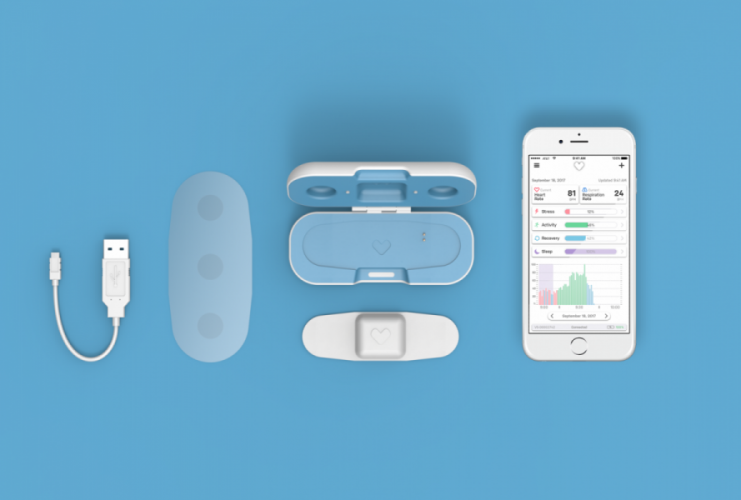
Perhaps most importantly, reusable devices support stronger data continuity. As the same device remains with a patient across the monitoring period, there are fewer interruption points in data collection. Devices such as Vivalink’s Wearable ECG Patch Monitor and Wearable Continuous Temperature Monitor have been successfully utilized in clinical studies including drug development and chemotherapy, allowing for seamless, uninterrupted remote monitoring. This advantage extends to sponsors conducting multiple trials. By reusing devices, sponsors can avoid buying new batches of the same devices repeatedly for each new trial. Not only does this lower operational costs, but the continuity reduces the likelihood of data gaps as well, lowering the risk of repeat assessments or trial extensions. In larger trials, even minor improvements in data continuity can compound into meaningful time and cost savings.
By eliminating the frequent device replacement cycles that disrupt workflows, reusable devices can reduce data loss and increase the likelihood of capturing usable data the first time. Designing devices for multiple monitoring sessions also reduces the repeated operational burden placed on trial teams, sites, and participants. Patients no longer have to wait for new devices to arrive, supporting faster study startup and smoother trial execution.
Disposable devices may seem cheaper per unit, but the consistent manufacturing, shipping, and disposal costs add up. Reusable devices, by contrast, enable continuous or repeat monitoring with greater efficiency, cutting down those repeated costs. While reusable devices might not be the answer for every trial, studies conducted using wearables and similar devices stand to benefit sponsors, clinicians, and patients. Switching to reusable technology allows clinicians to capture the whole story while avoiding logistical headaches and recurring expenses from constant replacements, making sustainability a necessity for success.


51 E Campbell Ave #160, Campbell, CA 95008
Copyright © 2026 VivaLNK, Inc. All Rights Reserved.


No Comments Yet
Let us know what you think