

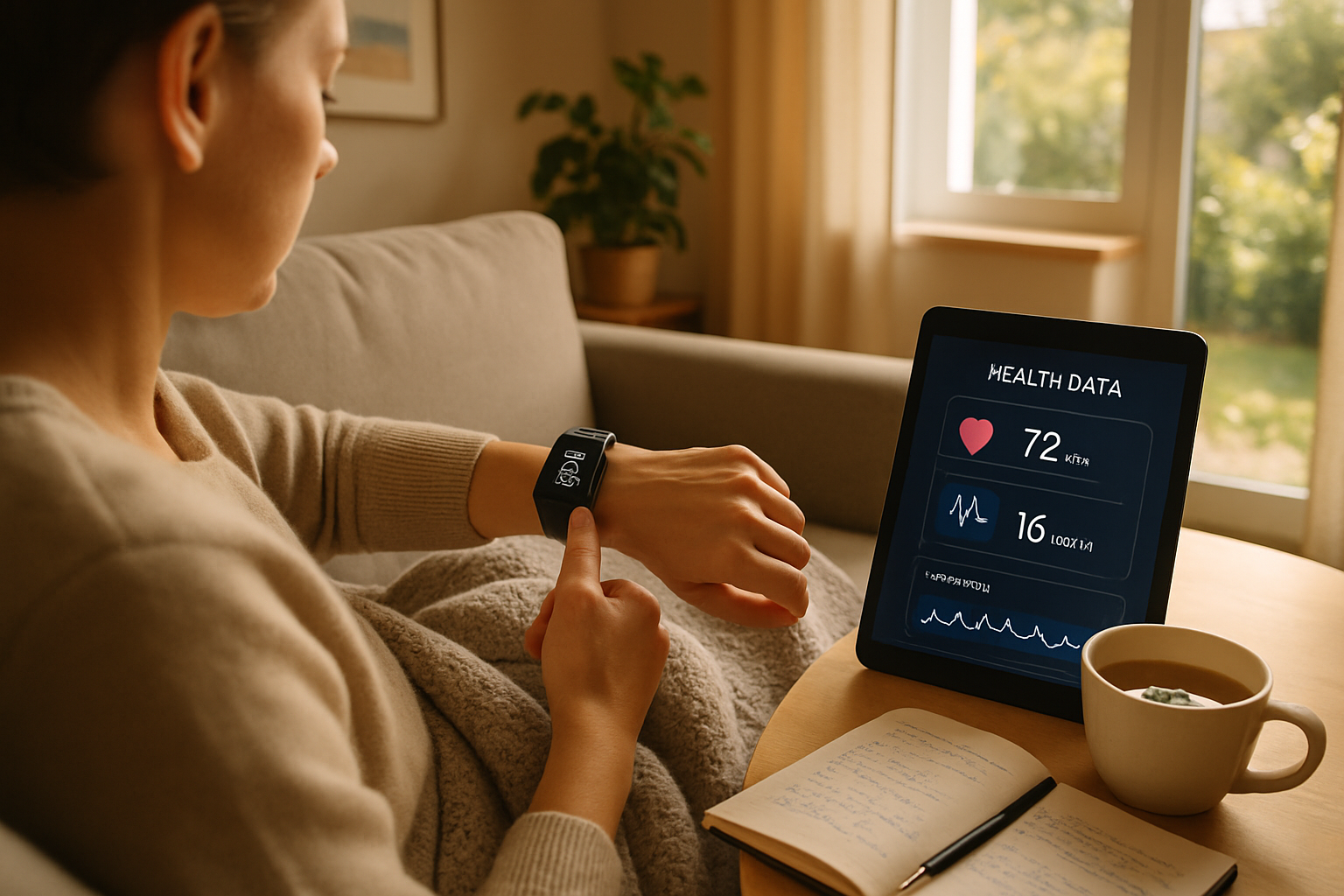
Mental health conditions such as depression, post-traumatic stress disorder (PTSD), eating disorders, and stress can be deeply personal, varying from patient to patient, which makes finding a way to objectively measure them difficult. Symptoms tend to fluctuate from day to day, and sometimes even hour to hour. Identifying a predictable pattern is difficult, and while periodic clinical assessments and self-reported scales offer valuable insights, they fail to capture the entirety of a patient’s experience the way continuous monitoring can.
Research points toward a new mental health measurement directly related to a patient’s emotions: the heart. More specifically, researchers are looking at heart rate variability (HRV), as it not only provides a non-invasive reflection of heart health, but it also provides a window into a person’s psychological state. The heart is directly affected by emotions and stress, a concept made visible by lowered HRV as the natural variability of the heart’s rhythm is suppressed. By focusing on those reactions – or a lack of them – HRV can be used to monitor mental health conditions as well.
As focus turns to objective assessments, cardiac monitoring through heart rate variability (HRV) is emerging as a powerful biomarker, one with the potential to reshape how we measure mental health.
In this blog, we will cover:
Traditionally, mental health conditions are assessed through self-reported questionnaires, diagnostic interviews, and clinician-rated scales, all of which are subject to patient variability. Unlike these traditional methods, HRV provides a basemark for objective measurement. Looking at HRV does rely on patients’ recollections or measurements of symptoms, allowing for clearer observation and identification of patterns across a larger volume of patients.
Furthermore, research links lower HRV to a number of conditions, including depression and PTSD. In patients with major depressive disorders, patients are often stuck in a flight-or-fight mode. On the other hand, persistent hyperarousal is commonly observed in patients with PTSD, keeping the nervous system in a state of constant engagement. Both of these mental health conditions leave HRV levels low, marking a consistent pattern on the heart’s rhythm.
To maximize the potential of using HRV to measure mental health conditions, it is important to capture the entirety of a patient’s experience. However, some of these conditions, such as chronic stress, can shift a patient’s baseline, making their HRV appear deceptively stable in a controlled setting. Traditional approaches to measuring HRV often rely on short recordings taken during clinic visits, all within controlled conditions. Unfortunately, these conditions are when a patient is least likely to reflect their physiological state in the real world. Anxiety about the appointment and other emotional reactions can distort a patient’s results.
The symptoms of mental health do not follow clinic schedules. Patients with PTSD may experience their most significant symptoms at night, and patients with eating disorders experience them around mealtimes. Chronic stress builds up over the week, not just during that single appointment visit. By missing these symptoms, traditional monitoring is producing an incomplete picture.
Continuous cardiac monitoring provides uninterrupted insights, addressing the data gap from periodic monitoring head-on. By capturing heart rhythm data during real-world conditions like sleep, exercise, mealtime, and other events, researchers are able to gain insights of a patient’s full autonomic state. This kind of data reveals how HRV fluctuates throughout the day, how it responds to therapeutic intervention, and how it changes over treatment periods, all patterns that a single clinic visit cannot measure.
Continuous monitoring also provides a way to observe physiological changes in real-time, enabling researchers to make quicker, more confident decisions on interventions. For clinical researchers and sponsors designing trials around mental health conditions, capturing these autonomic signals can greatly enhance those trial results.
The heart is directly intertwined with emotion and stress. Continuous monitoring methods like Vivalink’s wearable ECG technology helps make that connection measurable, providing a way to move past the limitations of periodic clinic visits. This consistent HRV data represents a meaningful step forward for mental health researchers in tracking changes and evaluating the true impact of treatment.


51 E Campbell Ave #160, Campbell, CA 95008
Copyright © 2026 VivaLNK, Inc. All Rights Reserved.


No Comments Yet
Let us know what you think