

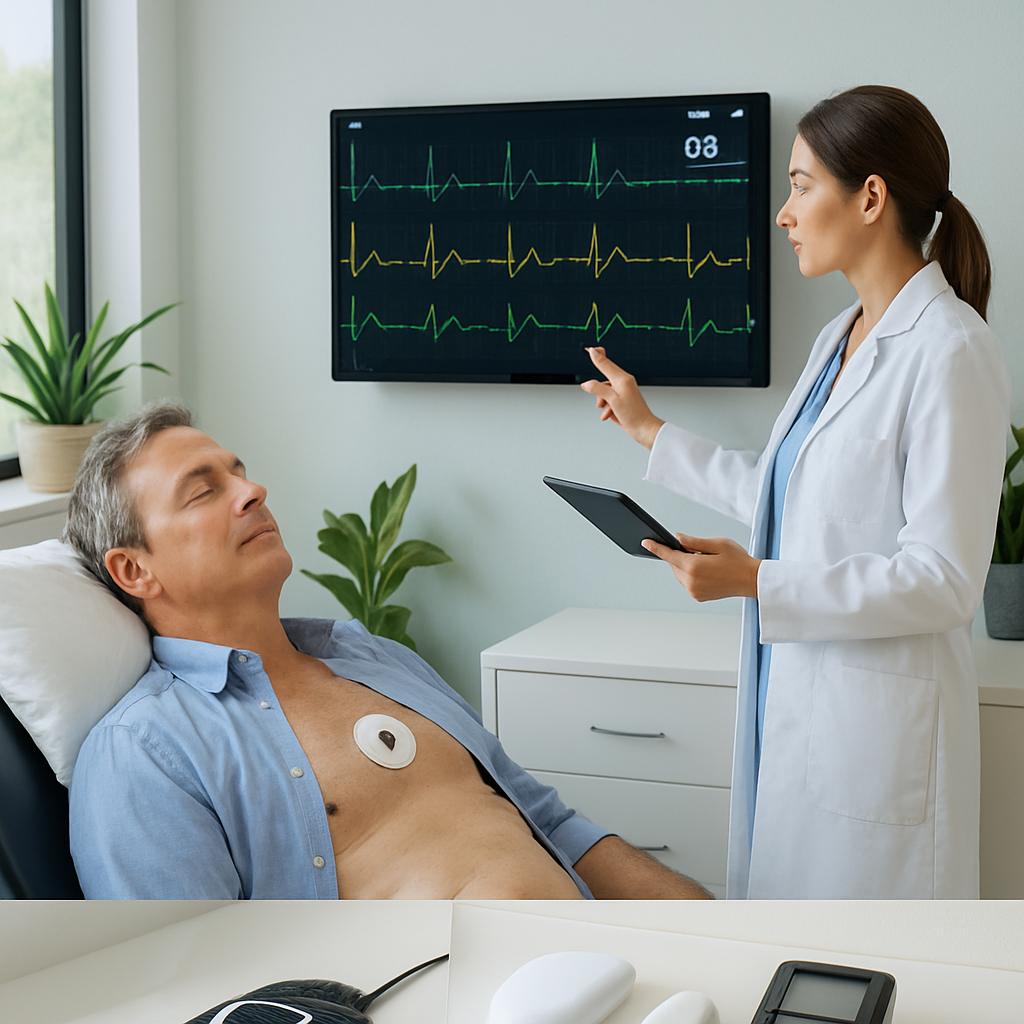

Cardiology practices have been under strain for some time, and that strain is only growing worse. Rising patient volumes and cardiovascular disease prevalence makes it difficult to maintain a high standard of care. Margins are growing tighter, reimbursements are shrinking, and staff shortages place a heavy burden on clinicians to do more with less.
While not entirely to blame, the use of outdated technology is a major cause of that strain. For example, the traditional tech used to record the heart’s electrical activity, the Holter monitor, cannot provide the cardiac care it needs to, leading to missed arrhythmias and delayed diagnoses. As its data cannot be analyzed in real time, clinicians are left with little visibility into symptoms between patient visits. This episodic data simply can’t match the complexity needed for modern care.
In this blog, we will cover:
Developed in 1949 by Norman Holter, the Holter monitor was designed for a different era of cardiac care. Holter monitors can’t meet today’s needs because of their short wear time, typically 24 to 48 hours, which causes them to miss intermittent arrhythmias like Atrial Fibrillation (AFib) and Supraventricular Tachycardia (SVT). Unlike modern remote patient monitoring, Holter monitors do not transmit data automatically to the cloud. Instead, data is stored locally on the device until the monitoring period ends, resulting in a significant lag between cardiac events and data review, which completely removes the option of real-time analysis.
Additionally, Holter monitors aren’t comfortable. Patients describe skin irritation and other discomfort when wearing the device, making it difficult to remain fully compliant during the entire monitoring period. That lack of adherence, combined with the lag in data analysis, means the Holter monitor often leaves clinicians with fragmented, low-resolution data that fails to capture the real-world situation. The technology isn’t aligned with the industry shift toward continuous digital endpoints, sending a clear message: it’s time to embrace new continuous cardiac monitoring technologies.
Medical-grade wearable ECGs present the next step in cardiac monitoring. Delivering continuous, multi-day or week data, they have the ability to capture arrhythmias that Holter monitors miss. The real-time data they provide gives clinicians visibility into symptoms and rhythm changes between each patient visit, allowing for earlier detection and better informed decisions. For example, a recent study conducted by researchers at Brigham and Women’s Hospital revealed that 27% of cardiac surgery patients develop AFib after discharge, as detected by Vivalink’s wearable ECG patches.
Just as important for patient adherence and data integrity is wearability. Artifacts in trials often result from patient movement or poor sensor contact, causing errors that can throw off otherwise valuable data. Lightweight and comfortable, wearable ECG patches support improved patient adherence and symptom detection over longer periods of time, reducing interpretation errors by filtering out motion-related “noise.” What’s more, Vivalink’s wearable ECG data upload is automated, reducing workload and accelerating diagnoses.
For cardiology practices, wearable ECGs present a more convenient and efficient method to ensure accuracy while monitoring patients. Having continuous, high-quality data translates directly into outcomes that matter. Earlier detection of arrhythmias missed by Holter monitors means earlier intervention, ultimately leading to better clinical outcomes and revenue continuity through timely diagnoses and follow-up care. Supported by real-time visibility into a patient’s heart rhythm between visits, clinicians can make decisions based on more complete datasets that improve risk stratification and reduce uncertainty.
The benefits of wearable ECGs are widespread, enabling cardiology practices to handle more patients without added staffing. These wearable patches also improve patient experience and adherence, leading to more accurate diagnoses, fewer repeat tests, and faster clinical insights, ultimately supporting value-based care and digital endpoints.
Today’s connected cardiology practice has outgrown the Holter monitor’s episodic, low-fidelity data. Connected, medical-grade wearable ECGs are the natural next step, giving cardiology practices the continuous visibility, efficiency, and diagnostic accuracy they need to deliver modern care. Learn more about the future of cardiac monitoring by exploring Vivalink’s wearable ECG technology.


51 E Campbell Ave #160, Campbell, CA 95008
Copyright © 2026 VivaLNK, Inc. All Rights Reserved.


No Comments Yet
Let us know what you think